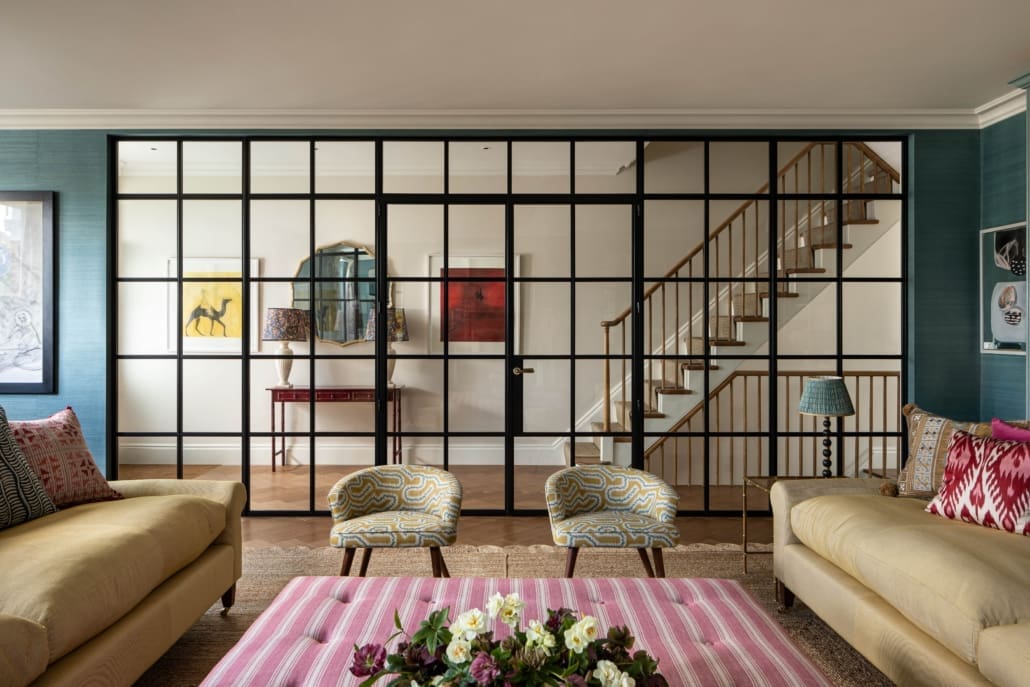
Internal W20 doors and screens in a Fulham townhouse. Design and vision by Amelia McNeil; supplied and installed by Perla Windows. Image credit: David Butler (all images)
As the UK’s leading authority on steel windows, doors and screens, the Steel Window Association (SWA) represents manufacturers, suppliers and specialists committed to maintaining the highest standards of craftsmanship, performance and design across the industry.
Here, the SWA talks to leading interior designer, Amelia McNeil, about how steel in the home steals the show for aspirational clients.
Slim‑profile steel windows and doors are amongst the most recognisable features of modern residential design, combining the charm of heritage architecture with the clean, crisp lines favoured by today’s homeowners. From internal steel screens which divide open‑plan spaces to dramatic full‑height external glazing, steel‑framed systems offer a timeless aesthetic suited to both traditional and contemporary homes.
The appeal lies in slender sightlines, strong geometry and authentic metal finishes, paired with carefully engineered proportions. This balance of industrial heritage and modern refinement continues to inspire designers and homeowners alike.
Interior designer Amelia McNeil explains how central steel glazing has become to her work: “Steel windows and doors feature in most of our projects, particularly as integral screens, helping to divide spaces while maintaining light and visual connection. In Grade II listed buildings, we often use bronze finishes to ensure the design sits comfortably within its historic setting.”
Amelia also notes a shift in how homes are being planned: “Clients are choosing to break up open‑plan layouts to create calmer, more intimate spaces – something steel screens are ideally suited to support.”
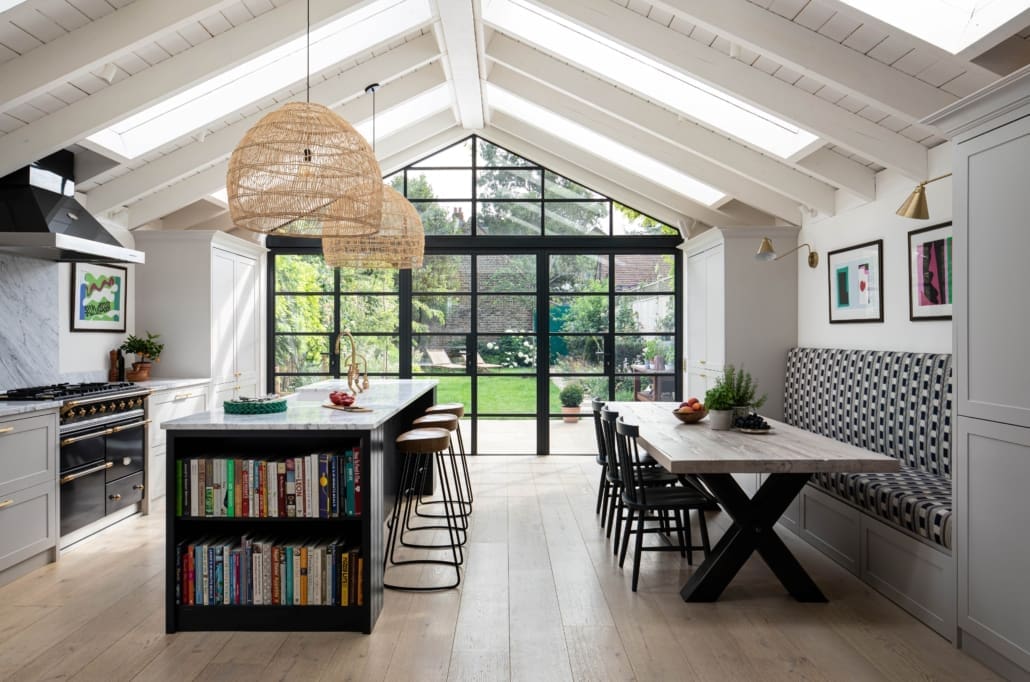
Stunning W20 steel doors in a London extension. Design by Amelia McNeil, supplied and installed by Perla Windows.
Zoning open‑plan living with internal steel screens
As many households move away from fully open‑plan layouts towards more defined ‘broken‑plan’ living, internal steel screens have become an elegant solution. They allow natural light to flow freely while subtly separating living, dining and kitchen areas, creating a sense of structure without losing openness.
Reflecting on this trend, Amelia says: “Steel has long been popular with my clients, and demand has continued to grow over the past decade. The ability to flood interiors with natural light, combined with strong aesthetic appeal, makes steel screens a real design statement.”
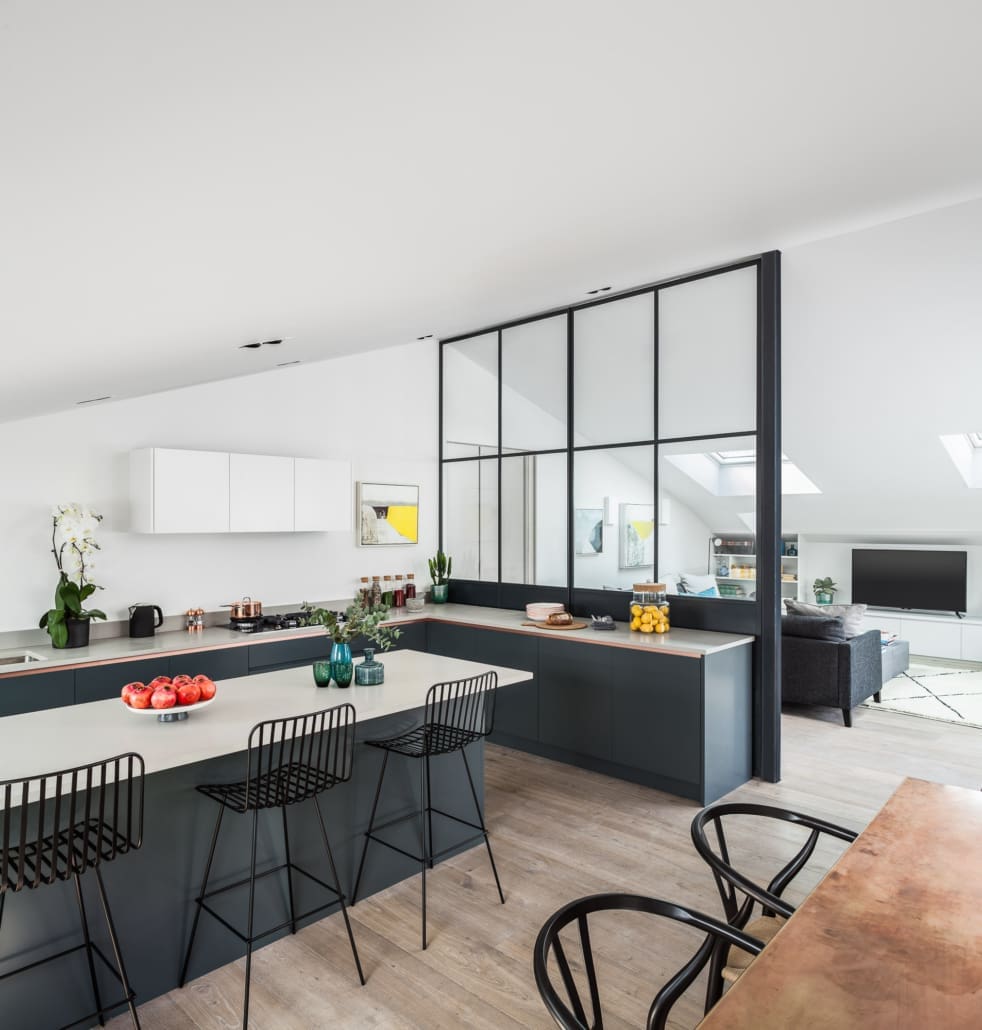
Steel screens are perfect for zoning areas to create calm environments. Design by Amelia McNeil.
Fire‑rated steel doors: safety with style
Where fire protection is required, fire‑rated steel doors deliver essential performance without compromising on design. Available in FD30 and FD60 configurations, they retain the same slim, elegant sightlines while meeting stringent safety standards, making them suitable for spaces such as hallways, stair enclosures, kitchens, utility rooms, basement conversions and apartments.
As Amelia explains: “The level of technical input depends on the scale of the project. On smaller schemes, I’ll guide clients through considerations such as energy efficiency, while on larger projects I ensure close collaboration with specialist contractors to address compliance and fire ratings. My role is always to focus on the overall look and feel, ensuring proportions, glazing layout and sightlines are appropriate to the style, scale and age of the property.”
Full‑height external steel windows and doors
For extensions, renovations and new‑build homes, full‑height steel‑framed glazing creates a striking architectural presence while referencing historic metal window designs. The inherent strength of steel allows frames to remain slender even across large expanses of glass, delivering uninterrupted views, minimal visual obstruction, strong security and excellent thermal performance when paired with modern thermally broken systems.
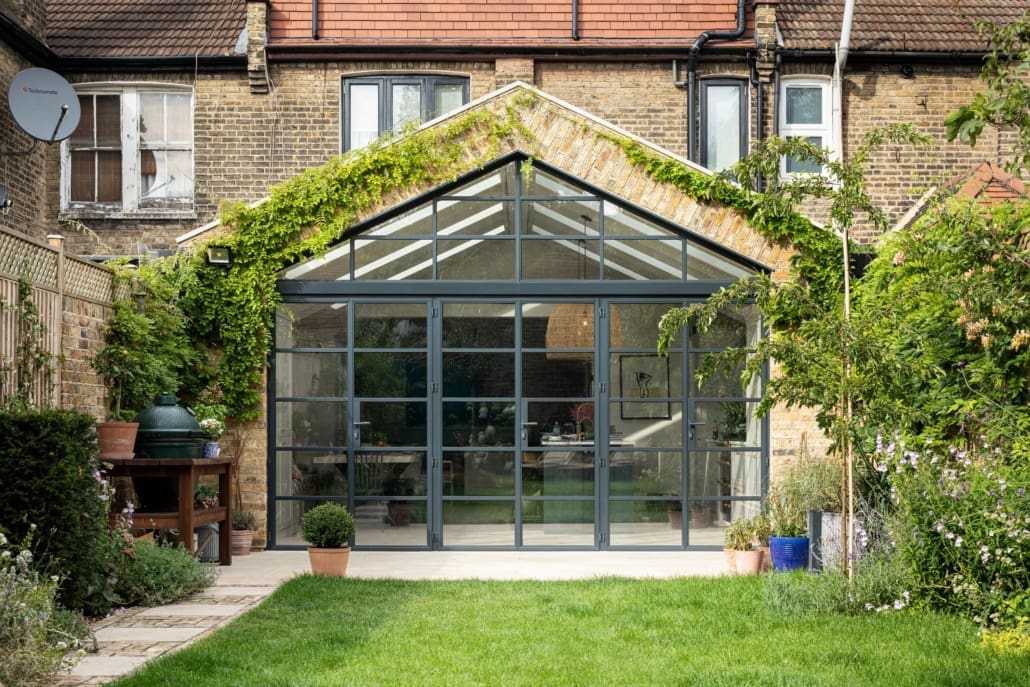
Full height W20 steel doors seamlessly blends the new build extension with the garden whilst maximising natural lighting conditions. Design by Amelia McNeil, supplied and installed by Perla Windows.
Respecting character while introducing contemporary design
Preserving original character remains a priority in Amelia’s projects, particularly in period and heritage settings: “Each door design is thoughtfully developed to sit comfortably within the home’s exterior architecture. Careful consideration is given to proportions and glazing bars to achieve a balanced look, allowing the original architectural features to take centre stage.”
In full refurbishments, she often recommends specifying new steel systems rather than retaining older ones: “We tend to specify new steel windows and doors that sit comfortably within the façade. Colour selection is key – recently we specified dark green steel windows that blended with the gardens outside at the same time as making a statement.”
A cohesive approach inside and out
Internally, steel partitions and doors are introduced with equal sensitivity: “We always take cues from the existing character of the house, ensuring internal steel elements complement the interior architecture and sit comfortably alongside exterior glazing.”
For Amelia, steel glazing plays a fundamental role in shaping both layout and architectural language: “Slim profiles, strong lines and the ability to maximise natural light help define layouts, whether we’re enhancing period character or introducing a more contemporary feel.”
She concludes: “Design conversations often begin with mood boards, focusing on how clients want their home to feel. Steel windows are frequently central to that vision, as they are integral to both the personality and function of the spaces we design. Clients often request that we use them in our very first design meeting.”
For further information on Amelia McNeil Interior Design, please visit https://www.ameliamcneil.com.